Open Positions
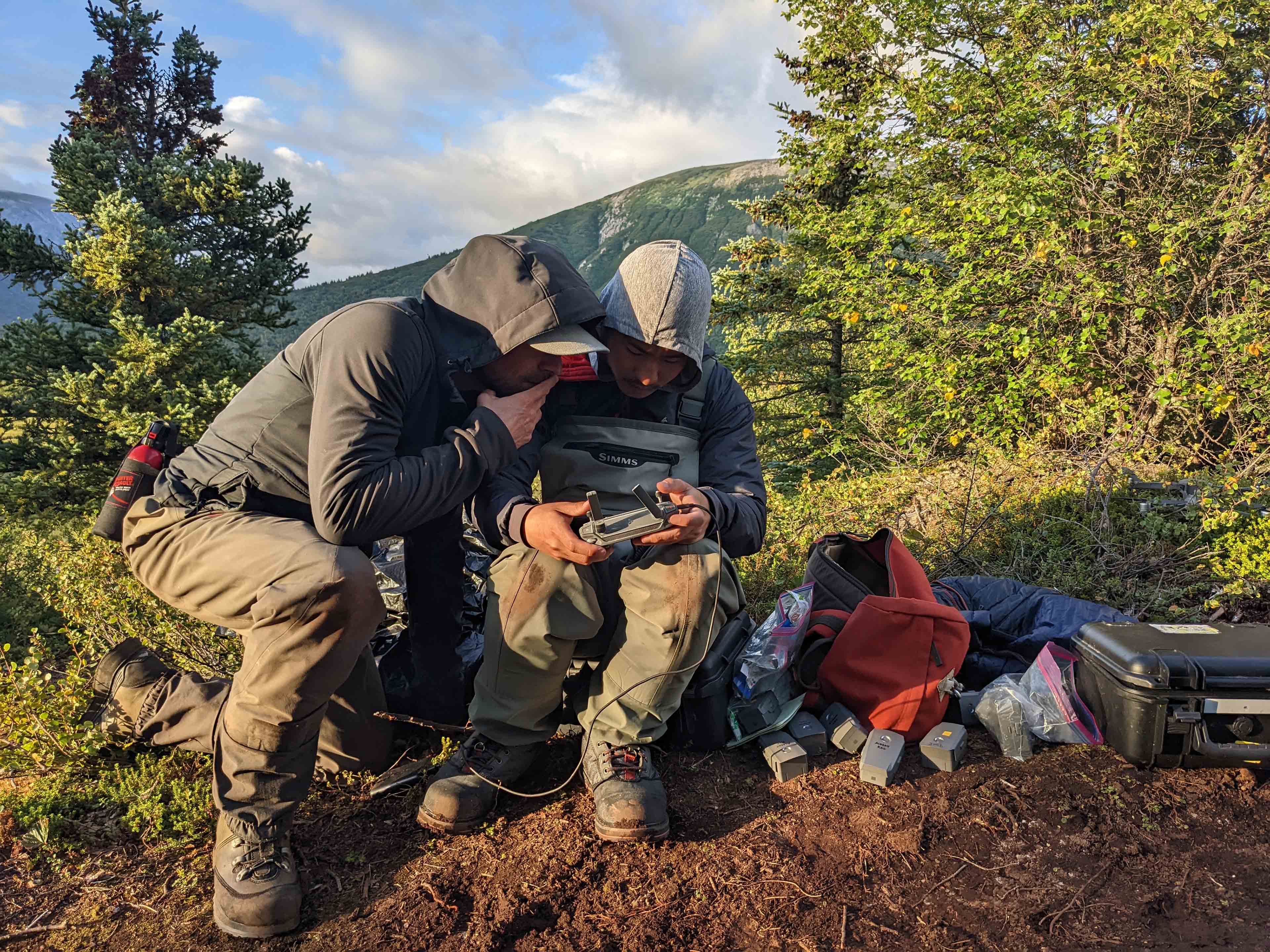
Reach out to Ben Koger at bkoger@uwyo.edu for general inquiries about joining the lab. Please see below for current active job listings.
Masters student - Interstate 80 Wildlife Crossings
Application google form: https://forms.gle/762GEvqnrdFwtS8XA
Initial application review will begin March 30th.
Fully funded for two years.
The Koger Lab is recruiting a masters student to join our lab at the University of Wyoming in Fall 2026 to design a computer vision system to study how highway underpasses can be optimized for migratory wildlife. This project is part of a larger initiative, in collaboration with Dr. Matt Kaufman and the Wyoming Migration Initiative, that focuses on documenting, protecting, and restoring iconic long-distance migratory routes of mule deer, pronghorn, and elk across Interstate 80 as featured in a recent news article about the project.
This student would help design and build a full stack web app that receives mobile-connected camera trap images through the cell network, processes them with custom, robustly trained computer vision models, and ultimately quantifies when and where animals like mule deer and pronghorn interact with crossing structures along I-80 in Wyoming in near real time. This tool, when built and validated, would be used by state agencies like the Wyoming Department of Transportation and the Wyoming Game and Fish Department to plan and monitor future wildlife improvements along this crucial barrier to wildlife movement in the American West and the southern tip of the Greater Yellowstone Ecosystem. Depending on the interests of the student, additional aspects of the project could include topics like investigating the behavioral and ecological drivers of successful animal crossings, scaling up the web tool to deploy across more landscapes, or designing additional computer vision models to extract further relevant information from the crossing photographs.
The Koger lab is jointly housed in the School of Computing and the Department of Zoology and Physiology. Based on the prospective masters student’s interests and academic background, they could get their degree in Artificial Intelligence or Geospatial Information Science and Technology through the School of Computing or in Zoology and Physiology through the Zoology and Physiology Department. Broadly, the Koger Lab specializes in designing and using cutting edge AI-driven computer vision tools to study and better understand the natural world. Specifically, we are interested in how imagery collected from aircraft, drones, satellites, and camera traps can be used to better monitor wild animal populations in natural landscapes and investigate the social and environmental drivers of fine-scale movement and behavior. Our research spans scales, systems, and aims with a focus both on fundamental ecological research and on building tools that have immediate impact on wildlife management and conservation. As a result, our lab is a deeply interdisciplinary group with members’ backgrounds coming from ecology, engineering, and computer science. Prospective students are not expected to have experience in all of these areas, but are expected to be excited to work in such an interdisciplinary environment. Experience with programming, whether in python, R, or another language, is a major asset. Application materials will start being formally considered on Monday March 30th and the position will remain open until filled. Please feel free to reach out to Ben Koger at bkoger@uwyo.edu with any questions or if you would like more details about how you may fit with this position.
Please apply to the position here: https://forms.gle/762GEvqnrdFwtS8XA
Ph.D. student
Application google form: https://forms.gle/Xqrge1zhLFLdrWDq5
Initial application review will start January 23.
The Koger Lab is recruiting a Ph.D. student to join our lab at the University of Wyoming in Fall 2026. The lab is jointly housed in the School of Computing and the Department of Zoology and Physiologyalthough prospective graduate students will join graduate programs in either the Zoology and Physiology department or the interdisciplinary Program in Ecology and Evolution. The Koger Lab specializes in designing and using cutting edge AI-driven computer vision tools to study and better understand the natural world. Specifically, we are interested in how imagery collected from aircraft, drones, satellites, and camera traps can be used to better monitor wild animal populations in natural landscapes and investigate the social and environmental drivers of finescale movement and behavior. Our research spans scales, systems, and aims with a focus both on fundamental ecological research and on building tools that have immediate impact on wildlife management and conservation. One current initiative is working with the Wyoming Game and Fish Department to scalably monitor pronghorn populations across millions of acres of the American West with high-resolution aerial imagery and trust-worthy software pipelines opening a new window into how landscapes shape populations. Another project, in collaboration with the Alaska Salmon Program, focuses on studying social migration dynamics of pacific salmon and brown bears in Alaska at sub-second sub-meter precision at the individual, group, and population level. While we are fundamentally interested in understanding natural systems, our work is only possible because of the novel imaging tools we use and the computer vision and data analysis software we are able to build. As a result, our lab is a deeply interdisciplinary group with members’ backgrounds coming from ecology, engineering, and computer science. Prospective students are not expected to have experience in all of these areas, but are expected to be excited to work in such an interdisciplinary environment. Some experience with programming, whether in python, R, or another language, is a major asset. Prospective students will be able to join and build projects on topics across the scope of the lab’s current areas of research based on the shared interests of the student and the lab. Please reach out if you would like to brainstorm project ideas. Projects may be more ecologically or more computationally driven based on the student’s interests and background. The position has three years of guaranteed RA funding with additional funding through internal university grants and TA positions expected.
Application materials will start being formally considered on January 23rd and the position will remain open until filled. Please feel free to reach out to Ben Koger at bkoger@uwyo.edu with any questions or if you would like more details about how you may fit with this position.