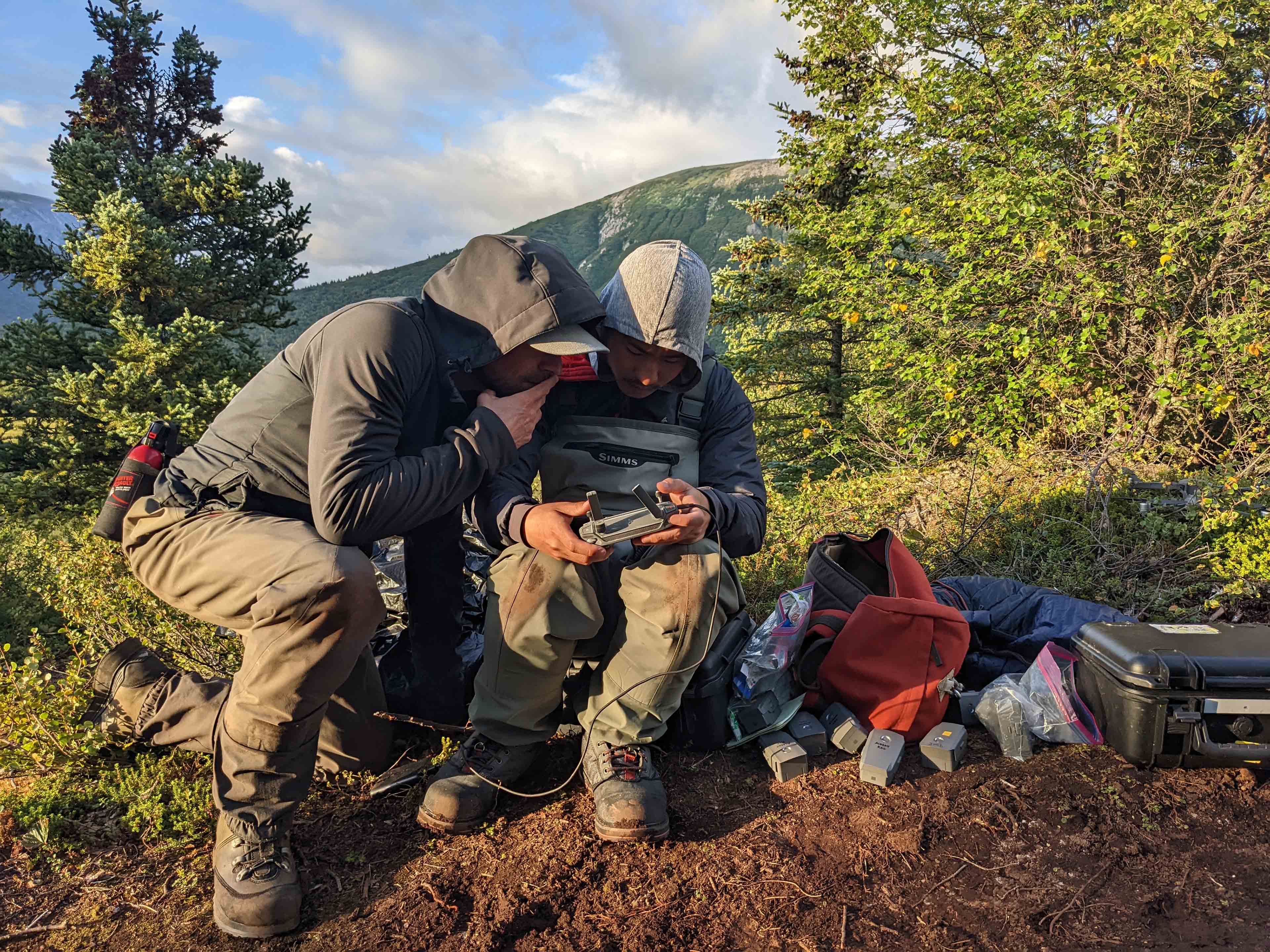
The Koger Lab specializes in designing and using novel imaging and image processing techniques to study natural systems. The lab uses a combination of drone, satellite, and ground-based imagery paired with deep learning detection and tracking algorithms to investigate how animals’ behaviors are influenced by their social and physical environments. The labs current research program is focused on novel methods for monitoring landscapes in the American West and understanding collective navigation and predator-prey dynamics in Pacific salmon ecosystems around Bristol Bay, Alaska.

Reach out to Ben Koger at bkoger@uwyo.edu for general inquiries about joining the lab. Please see below for current active job listings.
Masters student - Interstate 80 Wildlife Crossings
Initial application review will begin March 30th.
Fully funded for two years.
The Koger Lab is recruiting a masters student to join our lab at the University of Wyoming in Fall 2026 to design a computer vision system to study how highway underpasses can be optimized for migratory wildlife. This project is part of a larger initiative, in collaboration with Dr. Matt Kaufman and the Wyoming Migration Initiative, that focuses on documenting, protecting, and restoring iconic long-distance migratory routes of mule deer, pronghorn, and elk across Interstate 80 as featured in a recent news article about the project.
Ben Koger - PI

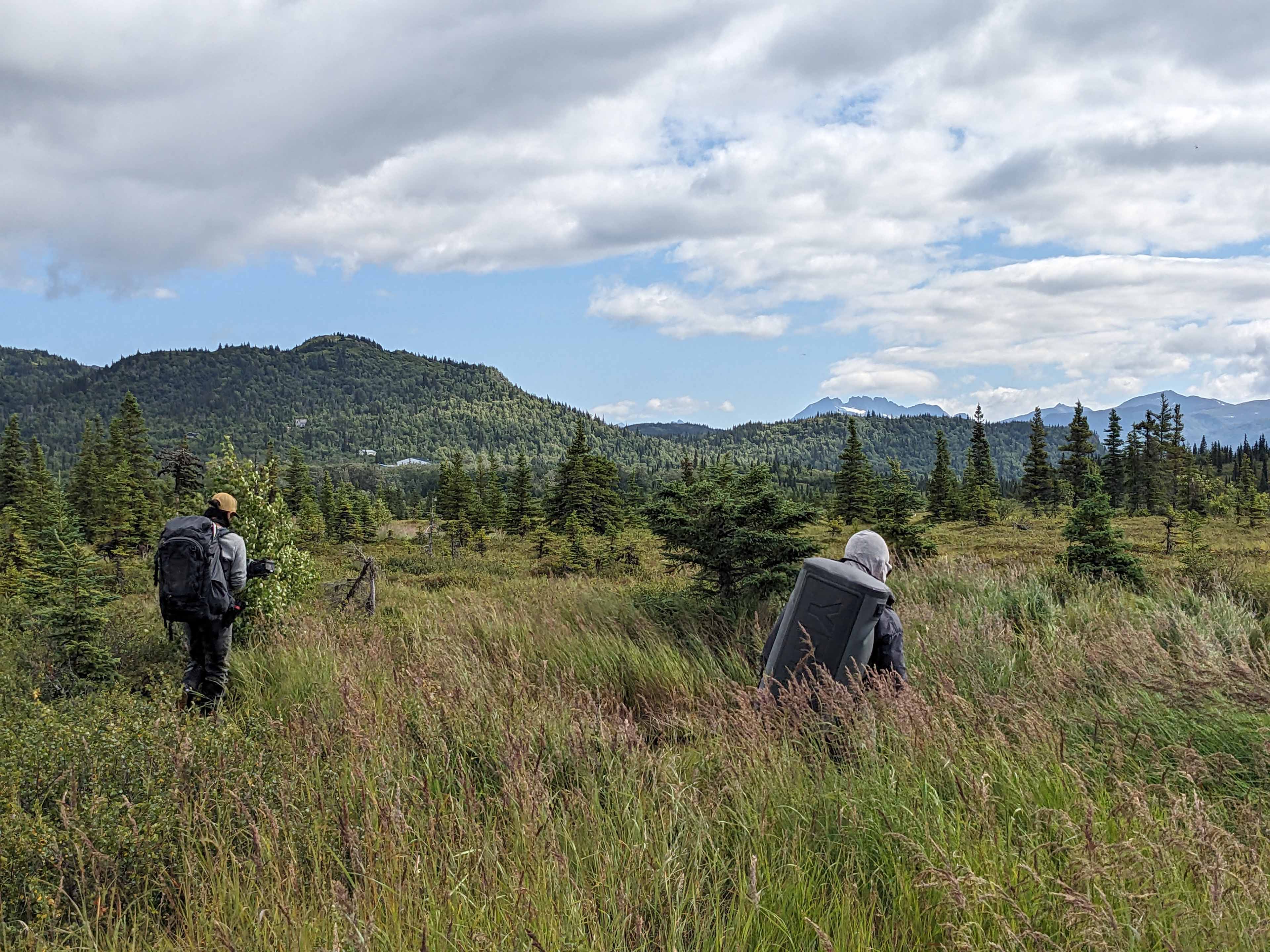
Ben Koger is an assistant professor in the School of Computing and the Department of Zoology and Physiology at the University of Wyoming. His work focuses on creating systems that allow for the efficient and automated study of ecological systems. Specifically, combining imaging and computer vision to monitor populations and study the relationship between individuals and their social and physical landscapes. His current research focus is building novel methods to monitor wildlife in the American West and pacific salmon migration and behavior in Alaska. Previously, he was a Washington Research Foundation Postdoctoral Scholar in the School of Aquatic and Fishery Sciences at the University of Washington working with Professor Andrew Berdahl. During his Ph.D. he worked with Iain Couzin at the Max Planck Institute of Animal Behavior in the Department of Collective Behaviour in Konstanz Germany. He completed his bachelors degree in electrical engineering at Princeton University where he focused on image processing and machine learning.

Current Projects
Landscape scale pronghorn aerial surveys
In collaboration with the Wyoming Game and Fish Department. This project is funded by a Multistate Conservation Grant (F25AP00132), from the U.S. Fish and Wildlife Service and jointly administered with the Association of Fish and Wildlife Agencies.
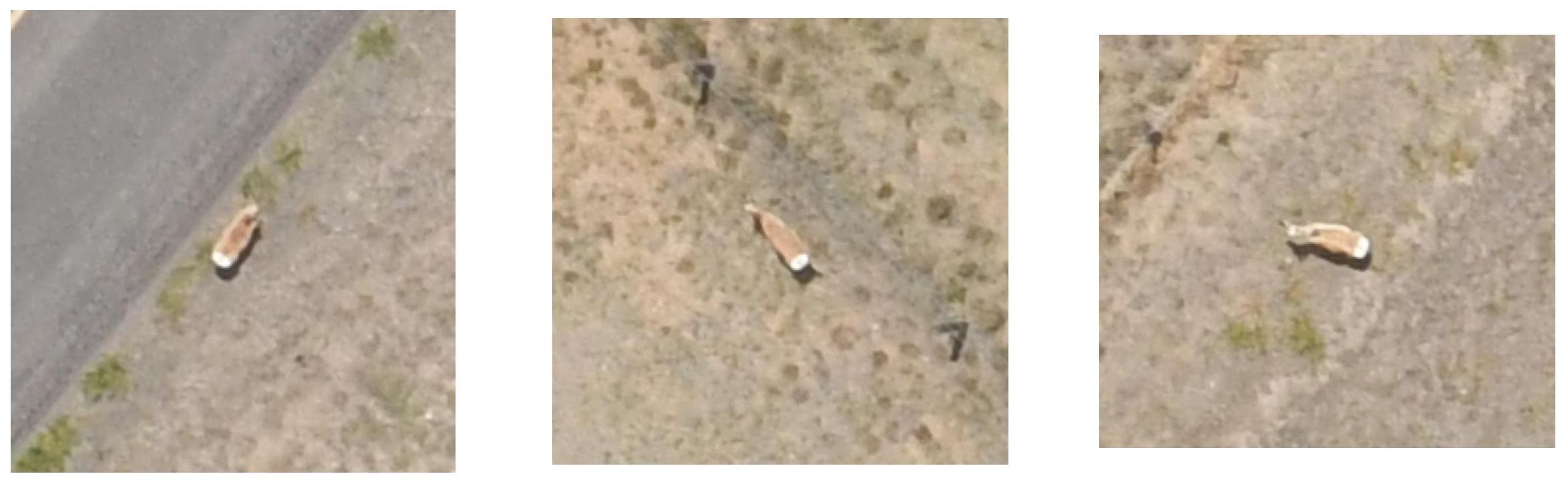
Across much of the American West pronghorn populations are estimated by observers in the back of low flying (300 feet) airplanes. This process is dangerous for observers and is challenging to validate and reliably scale across the pronghorn’s range. We are working with the Wyoming Game and Fish Department to build an AI driven pipeline for safe and reliable monitoring with airplane mounted high-resolution cameras. While it is well established that carefully trained deep-learning computer vision models can detect objects of interest in images, training and deploying these models across millions of acres of varied landscape while robustly estimating survey uncertainty with critical but minimal human validation is still a challenge. This project depends not only on building high quality machine learning models and designing new methods for scalable uncertainty estimation, but also careful software development for intuitive use by managers. The success of this project is fundamentally measured by its adoption by managers and impact on wildlife management.
Fall 2024, 2025, 2026
COMP2400: Foundations of Programming (Undergraduate level)
Course Description:
Unlock the power of programming and computational problem-solving across scientific, social, and human domains. Whether delving into the depths of historical archives, dissecting literary texts, or modeling intricate biological or economic systems, the ability to effectively create and use software tools is increasingly indispensable across a diverse range of professions and research domains. This class will rigorously teach the foundations of programming and computational thinking motivated by problems from a diverse range of disciplines. The course will be taught in the Python programming language and will start from the very basics with no assumption of prior experience.